3
v2 headers to recognize
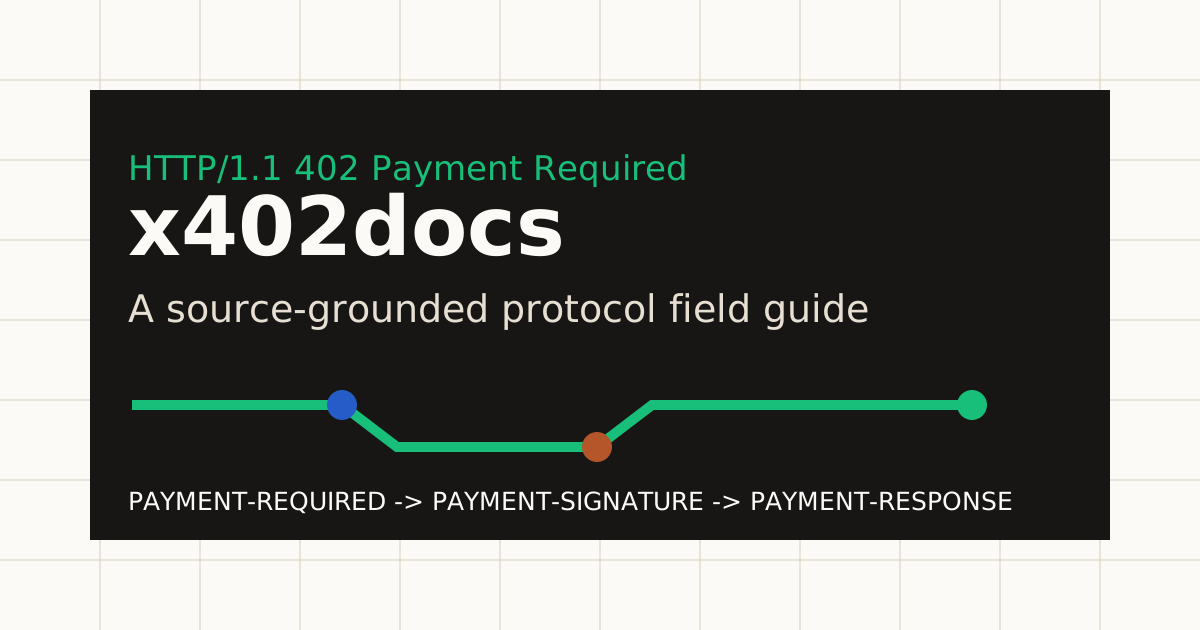
PAYMENT-REQUIRED, PAYMENT-SIGNATURE, and PAYMENT-RESPONSE are the names new x402 implementations should understand.
HTTP 402 payment protocol field guide
x402docs.com explains the current v2 flow, headers, server setup, buyer policy, facilitators, networks, schemes, migration traps, and agent-commerce patterns with primary sources attached.
3
PAYMENT-REQUIRED, PAYMENT-SIGNATURE, and PAYMENT-RESPONSE are the names new x402 implementations should understand.
CAIP-2
v2 uses identifiers such as eip155:8453 rather than ambiguous local aliases such as "Base mainnet."
0
HTTP 402 is reserved in HTTP semantics, but generic browser behavior is still not a universal payment experience.
Free tools
Generate a client-side x402 v2 exact-scheme PAYMENT-REQUIRED response, Base64 header value, decoded JSON object, and retry curl shape.
Compare pay-per-use x402 API revenue against subscription or API-key pricing with dated fee assumptions you can edit.
Decode Base64 x402 PAYMENT-SIGNATURE, PAYMENT-REQUIRED, PAYMENT-RESPONSE, or legacy X-PAYMENT values entirely in the browser.
Protocol map
1
The client asks for a paid HTTP resource.
2
The server returns payment requirements.
3
The client signs a scheme-specific payload.
4
The server or facilitator checks the payload.
5
The server returns content plus payment response.
Read first
A plain-English but implementation-aware explanation of x402, the HTTP 402 payment protocol for paid APIs, content, and AI agents.
A step-by-step map of the x402 v2 request flow, including PAYMENT-REQUIRED, PAYMENT-SIGNATURE, and PAYMENT-RESPONSE.
How to decide what to protect with x402, configure route requirements, choose a facilitator, and test paid API endpoints.
How x402 buyers, HTTP clients, and AI agents should evaluate payment requirements, sign payloads, and retry safely.
What x402 facilitators do, when to use one, and how to evaluate facilitator trust, uptime, and settlement behavior.
A practical guide to x402 network identifiers, default assets, stablecoin choices, and chain-specific implementation tradeoffs.
Implementation depth
A scheme defines what the client authorizes and what the server or facilitator can settle. Pick the scheme based on pricing semantics, not just SDK availability.
x402 makes payment easy to attach to HTTP. That does not make payment easy to secure. The main risks are replay, wrong destination, wrong amount, unlimited wallet authority, unclear refunds, and retry ambiguity.
Many search results and older examples still show v1 patterns. New integrations should recognize the differences before copying code.
x402 is compelling for agents because it gives tools a way to ask for payment in the same protocol the agent already uses to fetch resources. The hard part is giving the agent safe authority.
x402 is not a universal replacement for subscriptions. It is a different commercial primitive: a resource can quote a price inside HTTP, a client can authorize one purchase, and the seller can serve the result after verification.
Most x402 debugging starts with the headers. v2 makes the payment handshake explicit: the server advertises requirements, the client retries with a signed payload, and the server returns settlement feedback.
This site is intentionally citation-heavy. x402 is moving quickly, so source selection matters: protocol docs and specs first, provider docs second, commentary last.